
PROIRON Resistance Bands Review: What the RCTs Show (2026)
Share
Affiliate disclosure: As an Amazon Associate, I earn from qualifying purchases. I only recommend products with real scientific evidence behind them, and I'm upfront about where the evidence is thin.
Do resistance bands actually build strength, or are they just a travel compromise?
I get this question constantly from clients who train with me and want something for the days they can't get to a gym: do bands actually work, or are they just better than nothing? I've been using the PROIRON 14-piece set for several months now, both personally and in client sessions, so I can answer that from the science and from repeated use — not a first impression.
What's actually in it
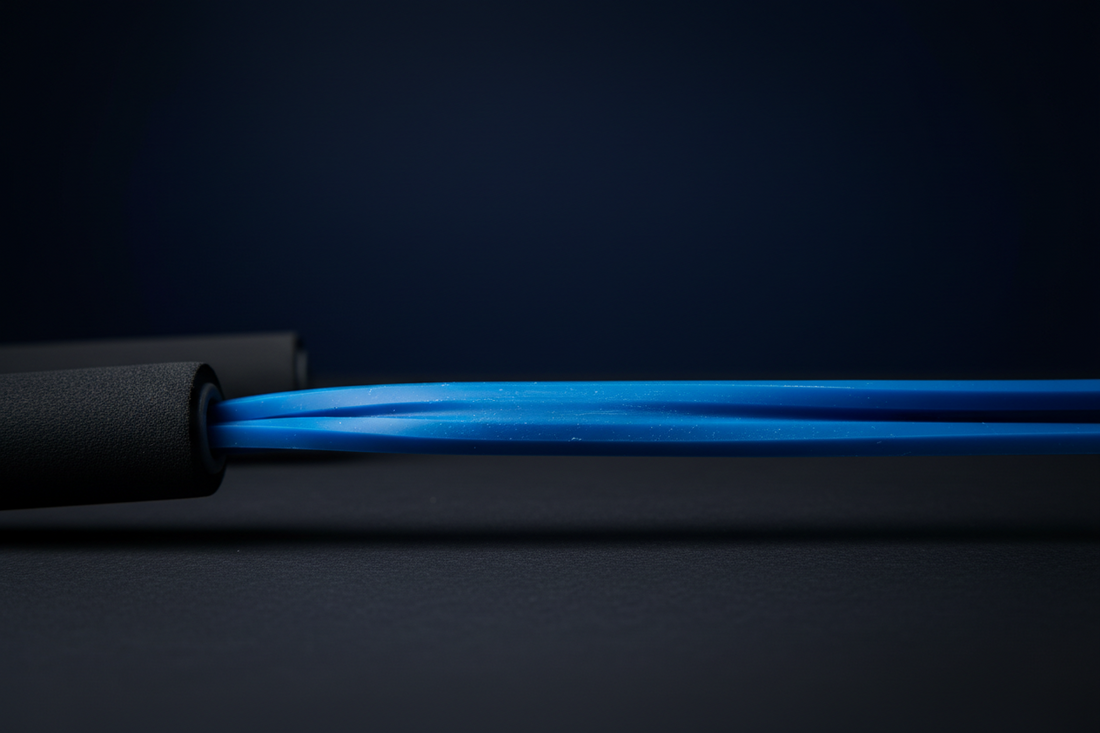
The PROIRON set is five resistance tubes color-coded from 10lb (yellow) up to 30lb (black), two foam handles, a door anchor, two ankle straps, a carrying bag and a training manual. The tubes stack — you can combine two or three at once for higher resistance, which matters as you get stronger and a single band stops being a challenge. Price sits at roughly AUD $29.99 for the full kit, so you're getting five resistance levels plus attachments for less than the cost of one gym session.
What the research says
The strength-training literature on elastic resistance is more established than most people assume. According to PubMed, a randomized controlled trial comparing elastic band training, elastic tube training and conventional weight-machine training over 12 weeks found no significant difference in peripheral muscle strength gains between the three modalities (Freire et al., Physiotherapy Theory and Practice, 2020). A separate RCT measured muscle activation (EMG) during banded push-ups versus barbell bench press at matched intensity, and found the two groups produced statistically similar strength gains over five weeks of training (Calatayud et al., Journal of Strength and Conditioning Research, 2015). In older adults specifically, a 12-week RCT using elastic band resistance training in postmenopausal women produced significant improvements in leg blood flow, vascular conductance and functional strength tests compared to a non-training control group (Egaña et al., Applied Physiology, Nutrition, and Metabolism, 2010).
The pattern across these trials is consistent: when resistance and intensity are matched, elastic bands produce comparable strength adaptations to conventional weights. The mechanism isn't magic — muscle doesn't know if tension is coming from a barbell plate or a stretched band, it responds to mechanical load and time under tension either way.
What I noticed using it
I've had this set for several months now, using it mainly for standalone resistance sessions — both my own training and with clients, not just as a warm-up tool. It's held up exactly as expected: no fraying, no loss of tension, the carabiners still lock securely. The stackable design is the practical strength here — starting a client on the yellow band and progressing them to green, then orange as they build capacity, mirrors how I'd progressively overload with dumbbells, just without needing five sets of dumbbells taking up space. The handles stay comfortable through a full session, and the door anchor hasn't marked up any door frames despite regular use.
Nothing about it has surprised me in months of use — it does exactly what a resistance band set is supposed to do, consistently. That's not a dramatic result to report, but for equipment, "does the job every time, no failures" is the actual bar that matters.
Who this is actually worth it for
This suits almost every biotype and goal, which is part of why I keep reaching for it. For ectomorphs building a base of strength without joint loading, the lighter bands are a genuinely useful entry point. For endomorphs or mesomorphs wanting a serious standalone strength stimulus, the higher bands stacked together get heavy enough to matter — the research above shows bands can match conventional resistance training when the load is genuinely progressive, not just token resistance. Where it makes less sense is if you're already training with a full barbell and rack setup and don't need a portable alternative; in that case, bands are a supplement to your current program, not a replacement.
The honest verdict
At around AUD $29.99, this is genuinely good value — five resistance levels, stackable, with the attachments you need to actually use them across a full range of exercises, backed by trial data showing elastic resistance training holds up against conventional weights when the load is matched properly. The limitation is one every resistance band has: form matters more than with a fixed weight, since the tension curve changes through the range of motion, so technique coaching matters if you're new to banded training. I'd buy this set again without hesitation, and have recommended it to clients who need a portable, capable setup.
→ Check current price on Amazon AU
If you want a training program built for your biology → milenium.com.au/pages/biofit-training
milenium.com.au/pages/biofit-training
References:
1. Freire APCF, Camillo CAM, de Alencar Silva BS, et al. Resistance training using different elastic components offers similar gains on muscle strength to weight machine equipment in Individuals with COPD: A randomized controlled trial. Physiother Theory Pract. 2020. DOI
2. Calatayud J, Borreani S, Colado JC, et al. Bench press and push-up at comparable levels of muscle activity results in similar strength gains. J Strength Cond Res. 2015. DOI
3. Egaña M, Reilly H, Green S. Effect of elastic-band-based resistance training on leg blood flow in elderly women. Appl Physiol Nutr Metab. 2010. DOI